Big Data Tools & Frameworks
1. what is Big Data Tools & Frameworks?
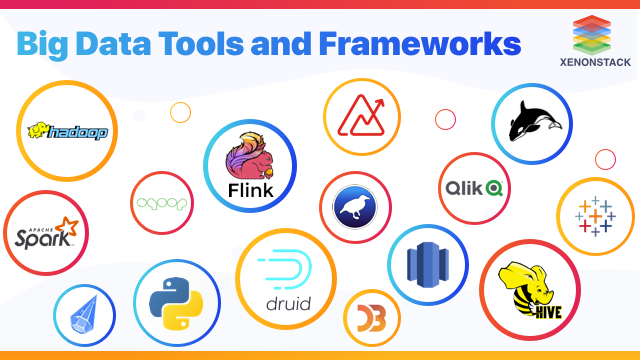
Big Data Fundamentalsrefer to the software and technologies designed to manage, process, and analyze large and complex datasets that traditional data processing methods cannot handle effectively. These tools and frameworks enable organizations to store, process, and derive insights from massive volumes of data, often in real time. Big data tools are crucial for businesses, governments, and researchers to unlock valuable insights from data that is too large, fast, or unstructured for conventional systems.
One of the most widely used Big Data frameworks is Apache Hadoop, an open-source platform that enables distributed storage and processing of large datasets across clusters of computers. Hadoop’s ecosystem consists of several key components: HDFS (Hadoop Distributed File System) for storage, MapReduce for processing data in parallel across many nodes, and YARN (Yet Another Resource Negotiator) for resource management. Hadoop also includes additional tools like Hive (a data warehousing and SQL-like query language), Pig (a scripting platform for processing large datasets), and HBase (a NoSQL database for handling real-time data). These tools together make it easier for organizations to work with big data, breaking down complex tasks into manageable chunks.
Another popular big data framework is Apache Spark, which is designed for fast, in-memory data processing. Unlike Hadoop, which relies on the disk for processing, Spark uses memory for computations, making it significantly faster than MapReduce for many operations. Spark supports multiple languages, including Java, Scala, and Python, and is ideal for real-time stream processing, iterative machine learning tasks, and graph processing. Spark integrates with a wide range of data storage systems, including HDFS, Apache HBase, and Amazon S3, making it highly flexible and scalable for big data applications. It also has built-in libraries for machine learning (MLlib), graph processing (GraphX), and streaming data (Spark Streaming), which enhances its capabilities for data scientists and analysts.
2.Hadoop
Hadoop
is an open-source framework used for the distributed storage and processing of large datasets across clusters of computers. It is designed to handle big data that is too vast or complex for traditional data processing tools to manage efficiently. Hadoop enables organizations to store, process, and analyze petabytes of data, even in environments with limited computing power. The framework is scalable, fault-tolerant, and capable of managing both structured and unstructured data, making it a core technology in the big data ecosystem.
At its core, Hadoop consists of two key components: HDFS (Hadoop Distributed File System) and MapReduce. HDFS is the storage layer that allows data to be distributed across multiple machines in a cluster. It breaks down large files into smaller blocks and stores them on different nodes within the system. This distributed approach ensures that the data is fault-tolerant, as copies of each block are stored on different machines, allowing the system to recover from node failures. MapReduce is the processing layer that enables parallel data processing. It splits tasks into smaller sub-tasks, which are distributed across various machines in the cluster, allowing large-scale computations to be performed quickly and efficiently. MapReduce processes data in two stages: the Map phase, where data is split and processed, and the Reduce phase, where the processed data is aggregated into the final result.
Hadoop also comes with a suite of additional tools and modules to enhance its functionality. For instance, Apache Hive provides a data warehousing solution built on top of Hadoop, offering a SQL-like query language for users to interact with big data. Apache Pig is another tool that offers a high-level scripting language for processing large datasets in a more concise way than MapReduce. Apache HBase, a NoSQL database, is used in conjunction with Hadoop for real-time data processing and storage. Additionally, YARN (Yet Another Resource Negotiator) is used for resource management within the Hadoop ecosystem, enabling better coordination and scheduling of resources across the cluster. These tools, along with others such as ZooKeeper for coordination and Oozie for workflow scheduling, provide a complete big data solution for enterprises.
3.Apache Spark
Apache Spark
is an open-source, distributed computing system that provides an efficient and scalable way to process large-scale data quickly. Unlike Hadoop’s MapReduce, which writes intermediate data to disk between stages, Spark processes data entirely in-memory, making it significantly faster for many workloads. Spark is designed to handle both batch processing (large, offline data processing) and real-time stream processing, making it versatile for various data processing needs. Its performance, ease of use, and advanced analytics capabilities have made it a popular choice for big data processing and analytics.
The core of Spark is its Resilient Distributed Dataset (RDD) abstraction, which allows for fault-tolerant, distributed data processing across multiple machines. RDDs are immutable collections of objects that can be processed in parallel across a cluster. RDDs support operations like transformations (e.g., map, filter, join) and actions (e.g., collect, save), which allow users to perform complex data operations efficiently. Spark supports both batch processing (for large-scale, offline data) and stream processing (for real-time data), enabling organizations to process historical and real-time data simultaneously. Spark provides several high-level APIs in Java, Scala, Python, and R, making it accessible to a wide range of data scientists and engineers.
One of the key strengths of Spark is its ability to integrate seamlessly with other big data tools and storage systems. It can read data from sources like HDFS, Apache HBase, Apache Cassandra, and Amazon S3, allowing users to work with data stored in a variety of formats. Spark also includes built-in libraries for machine learning (MLlib), graph processing (GraphX), streaming data (Spark Streaming), and SQL-based querying (Spark SQL). With Spark SQL, users can run SQL queries on data, making it easier to perform ad-hoc querying and integrate with traditional relational databases. Spark’s ability to process data in-memory, combined with its flexible architecture, has made it the go-to platform for large-scale data analytics, machine learning, and real-time processing.

Apache Spark
is an open-source, distributed computing system that provides an efficient and scalable way to process large-scale data quickly. Unlike Hadoop’s MapReduce, which writes intermediate data to disk between stages, Spark processes data entirely in-memory, making it significantly faster for many workloads. Spark is designed to handle both batch processing (large, offline data processing) and real-time stream processing, making it versatile for various data processing needs. Its performance, ease of use, and advanced analytics capabilities have made it a popular choice for big data processing and analytics.
The core of Spark is its Resilient Distributed Dataset (RDD) abstraction, which allows for fault-tolerant, distributed data processing across multiple machines. RDDs are immutable collections of objects that can be processed in parallel across a cluster. RDDs support operations like transformations (e.g., map, filter, join) and actions (e.g., collect, save), which allow users to perform complex data operations efficiently. Spark supports both batch processing (for large-scale, offline data) and stream processing (for real-time data), enabling organizations to process historical and real-time data simultaneously. Spark provides several high-level APIs in Java, Scala, Python, and R, making it accessible to a wide range of data scientists and engineers.
One of the key strengths of Spark is its ability to integrate seamlessly with other big data tools and storage systems. It can read data from sources like HDFS, Apache HBase, Apache Cassandra, and Amazon S3, allowing users to work with data stored in a variety of formats. Spark also includes built-in libraries for machine learning (MLlib), graph processing (GraphX), streaming data (Spark Streaming), and SQL-based querying (Spark SQL). With Spark SQL, users can run SQL queries on data, making it easier to perform ad-hoc querying and integrate with traditional relational databases. Spark’s ability to process data in-memory, combined with its flexible architecture, has made it the go-to platform for large-scale data analytics, machine learning, and real-time processing.
4.Apache Kafka
Apache Kafka
is an open-source distributed event streaming platform used for building real-time data pipelines and streaming applications. It was originally developed by LinkedIn and later open-sourced under the Apache Software Foundation. Kafka is designed to handle high throughput and is widely used for ingesting, storing, and processing massive amounts of data in real-time across distributed systems. It provides a scalable, fault-tolerant, and low-latency solution for managing data streams, which makes it ideal for applications requiring real-time processing such as data analytics, monitoring, and event-driven architectures.
At its core, Kafka is built around the concept of topics and partitions. A topic is a category or feed name to which messages are published, and each topic can be split into multiple partitions for parallel processing, making Kafka highly scalable. Producers are the entities that publish data to topics, while consumers are the entities that subscribe to these topics to read the data. The data in Kafka is stored as messages in logs, which are written to disk in an append-only fashion. Each message is timestamped and stored in a partition, which allows Kafka to scale out and store huge volumes of real-time data while also providing durability and fault-tolerance. Kafka’s distributed nature allows it to run on multiple machines (or nodes), ensuring high availability even if a node fails.
Kafka's architecture includes three primary components: Kafka brokers, Kafka producers, and Kafka consumers. Kafka brokers are the servers that store the data and serve the requests from producers and consumers. Kafka producers send messages to specific Kafka topics, and Kafka consumers read messages from these topics. Kafka ensures that messages are delivered in the order they were produced within a partition and allows consumers to keep track of their position (called offsets) so they can resume reading from where they left off. Kafka also provides ZooKeeper (although newer versions are moving away from it) for managing metadata and cluster coordination, although future versions are aiming for a Kafka-native metadata management approach.
5.TensorFlow for Data Science
TensorFlow for Data Science
s an open-source machine learning framework developed by Google that is widely used for data science tasks, particularly in the fields of deep learning and neural networks. It provides a comprehensive ecosystem of tools, libraries, and community resources that enable data scientists to build and deploy machine learning models with ease. TensorFlow is highly flexible and can run on a variety of platforms, including CPUs, GPUs, and TPUs (Tensor Processing Units), making it suitable for both research and production environments.
In the context of data science, TensorFlow offers a wide range of capabilities that make it suitable for solving complex problems involving large datasets. TensorFlow provides high-level APIs like Keras that simplify the process of building and training machine learning models. Keras is particularly popular because it offers a user-friendly interface for creating neural networks and is integrated directly into TensorFlow. Using TensorFlow, data scientists can easily preprocess data, build models, train them with backpropagation, and evaluate their performance. TensorFlow’s support for deep learning algorithms like convolutional neural networks (CNNs) and recurrent neural networks (RNNs) makes it ideal for applications in image recognition, natural language processing, and time series forecasting.
One of TensorFlow’s key strengths is its ability to handle large datasets efficiently. It provides tools such as TensorFlow Data for scalable data input pipelines, enabling data scientists to process and feed massive datasets into machine learning models without running into performance bottlenecks. TensorFlow also supports distributed computing, allowing models to be trained across multiple machines or GPUs, which significantly reduces training time for large-scale models. The framework's TensorFlow Hub provides a collection of pre-trained models that can be reused and fine-tuned for specific tasks, saving both time and computational resources. Additionally, TensorFlow Extended (TFX) is an end-to-end platform for deploying and managing machine learning models in production, making it easier for data scientists to move from experimentation to deployment.

6.Power BI & Tableau
Power BI & Tableau
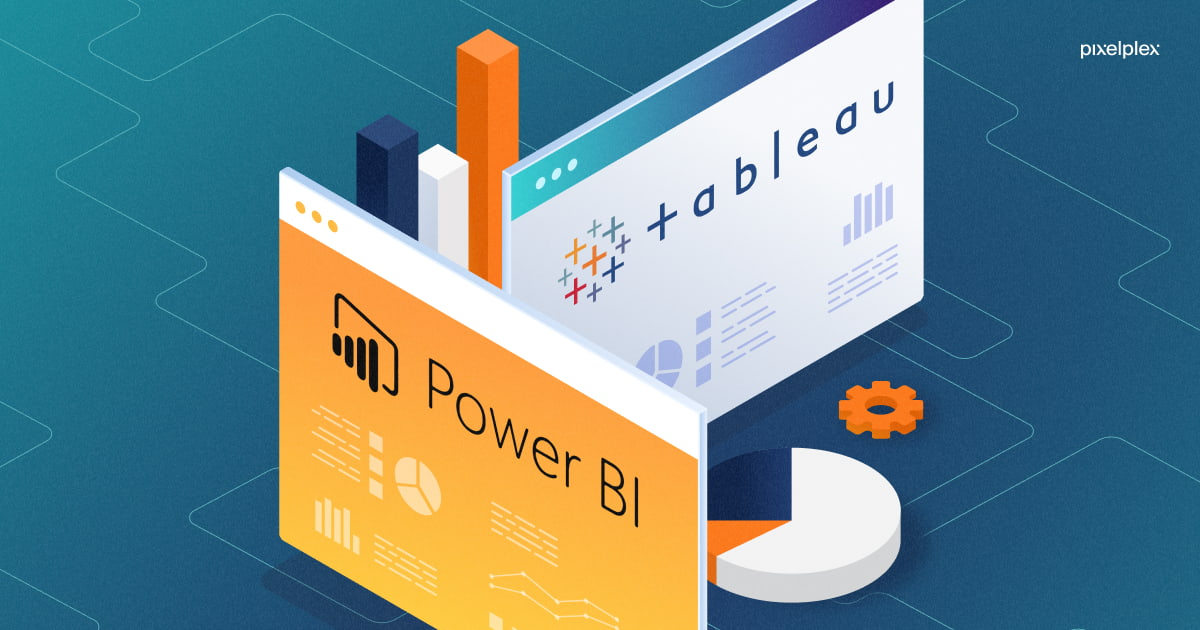
are two of the most popular business intelligence (BI) tools used for data visualization, reporting, and analytics. Both tools help users analyze and visualize data to make informed decisions, but they differ in several aspects like pricing, user interface, integration capabilities, and target audience. Here’s an overview of both tools:
Power BI, developed by Microsoft, is a cloud-based suite of business analytics tools that helps users visualize their data and share insights across their organization or embed them in an app. Power BI is known for its tight integration with other Microsoft products like Excel, SharePoint, Azure, and Teams, making it particularly popular in Microsoft-centric environments. It offers an intuitive drag-and-drop interface that allows users to build interactive dashboards, reports, and visualizations with minimal effort. Power BI also provides Power Query for data transformation and DAX (Data Analysis Expressions) for advanced data modeling and calculations.
One of Power BI's key features is its pricing structure, which is relatively affordable compared to Tableau, especially for small to medium-sized businesses. It offers a free version for individual users and a Pro version for teams, with Power BI Premium offering more advanced features like dedicated cloud resources and larger data model storage. It can handle large data sets, but for extremely large-scale data, Premium provides enhanced performance. Power BI also supports real-time dashboards, enabling users to monitor live data from various sources like databases, Excel files, and cloud services. Additionally, it has robust AI-powered analytics capabilities and integrates with Azure Machine Learning for advanced predictive modeling.
7.Data Lake Technologies
Data Lake Technologies
provide organizations with the ability to store vast amounts of unstructured, semi-structured, and structured data in its raw form, enabling advanced analytics and machine learning. At the core of data lakes is distributed storage infrastructure like Hadoop Distributed File System (HDFS) and cloud-based solutions such as Amazon S3 and Azure Blob Storage, which allow scalable and cost-effective data storage. This flexibility enables organizations to ingest data from various sources without the need for heavy preprocessing, making it suitable for large-scale data processing and real-time analytics.
Data lakes rely on robust data ingestion tools to collect and load data into the lake. Technologies like Apache Kafka facilitate real-time streaming of data, while Apache NiFi and AWS Glue help automate the flow of data from multiple sources. Once the data is in the lake, frameworks like Apache Spark, Apache Flink, and Apache Hadoop are employed to process the data at scale. These distributed computing frameworks enable high-speed processing for complex transformations, making it easier to work with large datasets and perform analytics without the bottlenecks typical in traditional systems.
In addition to storage and processing, data lakes require effective metadata management and security to ensure data quality, traceability, and access control. Tools like Apache Atlas and AWS Glue Data Catalog help organize and catalog the data, making it easier to search, query, and manage. Security features such as Apache Ranger and Azure Data Lake Security ensure that sensitive data is protected through role-based access control and encryption. Together, these technologies allow organizations to unlock the full potential of big data, enabling advanced analytics, AI-driven insights, and more efficient decision-making processes.
8.NoSQL Databases
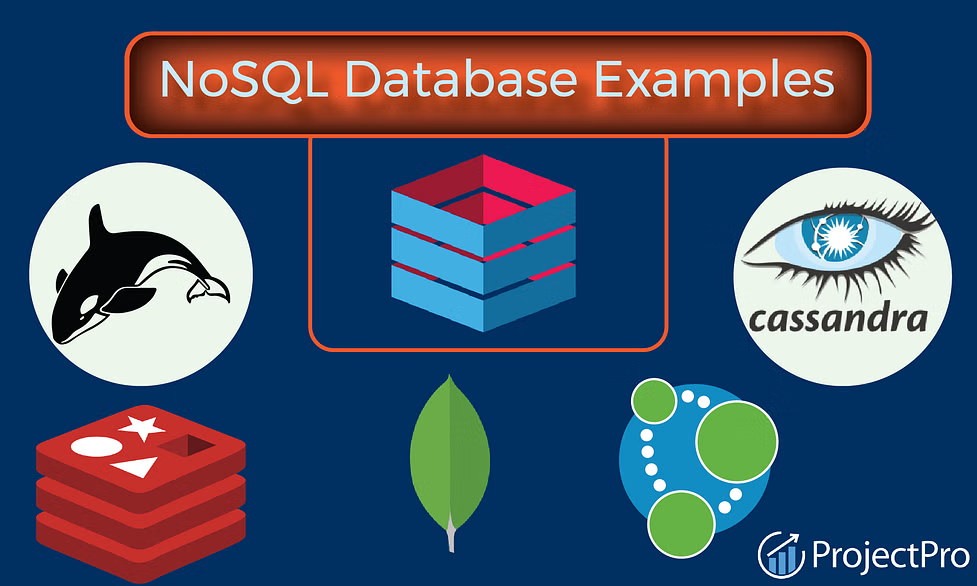
NoSQL Databases are a category of databases that provide a flexible, scalable, and high-performance solution for storing and managing large volumes of data, particularly unstructured or semi-structured data. Unlike traditional relational databases that use structured query language (SQL) and predefined schemas, NoSQL databases are designed to handle data models that do not fit into the rigid tables and rows of relational systems. These databases can store data in various formats such as key-value pairs, documents, graphs, and wide-column stores, making them ideal for applications with high throughput, low-latency, and flexible data structures. Popular NoSQL databases include MongoDB (document-based), Cassandra (wide-column store), Redis (key-value store), and Neo4j (graph-based).
The key advantages of NoSQL databases include scalability, flexibility, and performance. Many NoSQL systems are designed to scale horizontally across multiple servers, enabling them to handle large-scale, distributed data environments. This is especially beneficial for modern applications like social media platforms, real-time analytics, and IoT systems, which generate massive amounts of unstructured data. Additionally, NoSQL databases offer flexibility in terms of schema design, allowing developers to easily modify data models without needing complex migrations. This makes them well-suited for agile development environments and applications that evolve rapidly over time.
NoSQL databases also excel in scenarios that require high availability and fault tolerance, as they are often designed with distributed architectures that replicate data across multiple nodes. This ensures that the system remains operational even in the event of hardware failures. Additionally, NoSQL databases support eventual consistency over strict ACID (Atomicity, Consistency, Isolation, Durability) guarantees, making them more suitable for use cases where performance and availability are prioritized over strict consistency. As a result, NoSQL databases are increasingly used in industries such as e-commerce, gaming, big data analytics, and mobile applications, where data is dynamic and requires fast processing and storage.
NoSQL Databases are a category of databases that provide a flexible, scalable, and high-performance solution for storing and managing large volumes of data, particularly unstructured or semi-structured data. Unlike traditional relational databases that use structured query language (SQL) and predefined schemas, NoSQL databases are designed to handle data models that do not fit into the rigid tables and rows of relational systems. These databases can store data in various formats such as key-value pairs, documents, graphs, and wide-column stores, making them ideal for applications with high throughput, low-latency, and flexible data structures. Popular NoSQL databases include MongoDB (document-based), Cassandra (wide-column store), Redis (key-value store), and Neo4j (graph-based).
The key advantages of NoSQL databases include scalability, flexibility, and performance. Many NoSQL systems are designed to scale horizontally across multiple servers, enabling them to handle large-scale, distributed data environments. This is especially beneficial for modern applications like social media platforms, real-time analytics, and IoT systems, which generate massive amounts of unstructured data. Additionally, NoSQL databases offer flexibility in terms of schema design, allowing developers to easily modify data models without needing complex migrations. This makes them well-suited for agile development environments and applications that evolve rapidly over time.
NoSQL databases also excel in scenarios that require high availability and fault tolerance, as they are often designed with distributed architectures that replicate data across multiple nodes. This ensures that the system remains operational even in the event of hardware failures. Additionally, NoSQL databases support eventual consistency over strict ACID (Atomicity, Consistency, Isolation, Durability) guarantees, making them more suitable for use cases where performance and availability are prioritized over strict consistency. As a result, NoSQL databases are increasingly used in industries such as e-commerce, gaming, big data analytics, and mobile applications, where data is dynamic and requires fast processing and storage.
Comments